An idea for a future owner
A dentist-guided education platform
A provider-led model that turns common whitening questions into reviewed education and a clear route to licensed care.
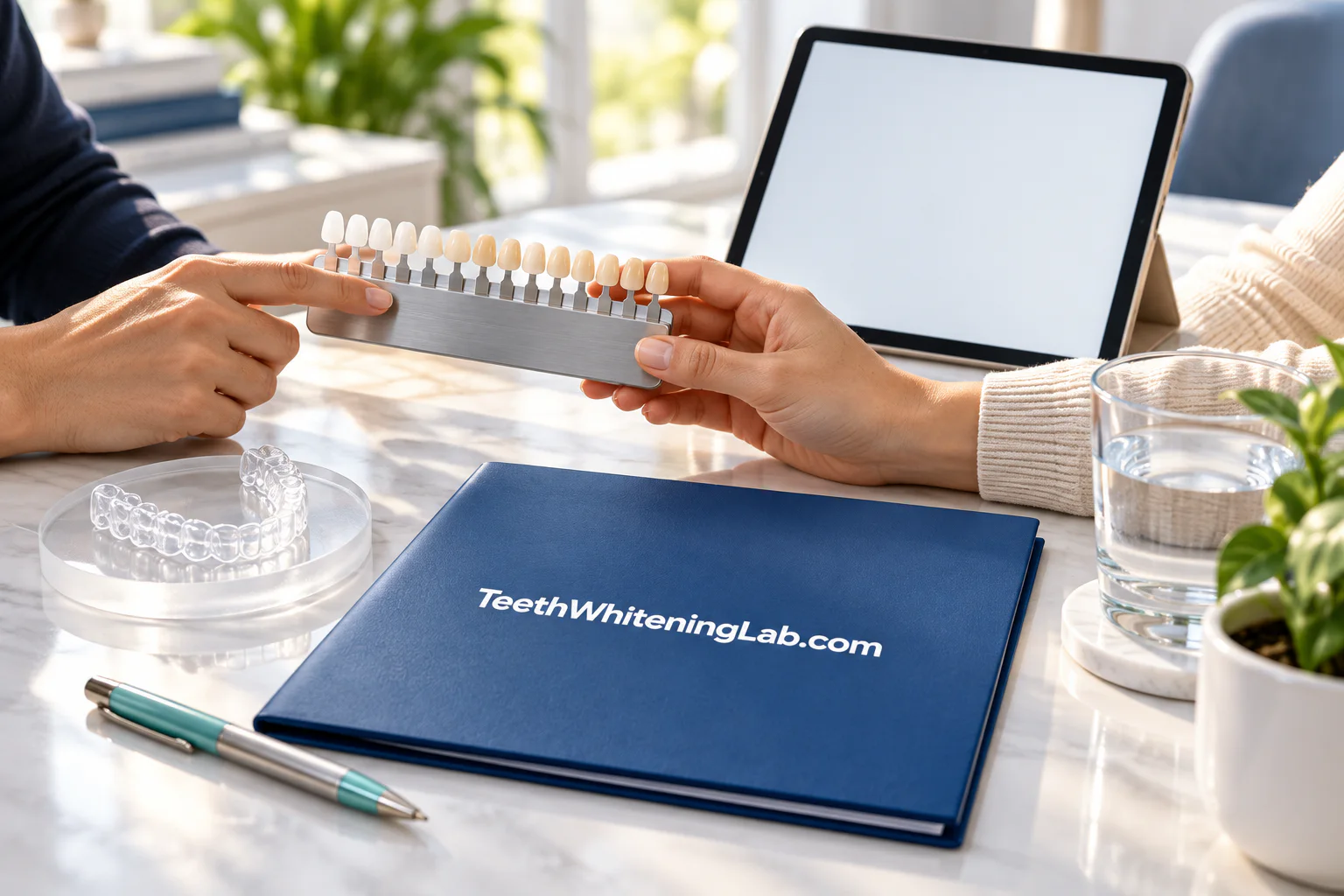
Someone considering whitening may want to know whether an old filling will match, what to ask about sensitivity, or which appointment to book. A dental group could use TeethWhiteningLab.com to answer common questions and help visitors arrange a consultation at one of its practices.
TeethWhiteningLab.com could serve that model for a dental group or credentialed provider network. This is an illustrative business concept, not a clinic or referral service currently operating under the domain.
Questions patients bring to an appointment
A visitor may know that whitening products exist while still being unsure which questions matter. The discoloration may be on the surface or within the tooth. Existing crowns, veneers, fillings, or implants may affect expectations. A history of sensitivity may change the conversation. The person may also be comparing an over-the-counter product, a dentist-supplied home option, and an in-office service without knowing that those paths are not interchangeable.
The ADA whitening overview covers the main topics these pages would need to explain. It distinguishes extrinsic and intrinsic discoloration, describes several whitening approaches, notes that tooth-colored restorations do not whiten like natural teeth, and identifies temporary sensitivity and gum irritation as common adverse effects. A platform can explain those points in plain language while leaving diagnosis, suitability, and treatment planning with a licensed professional.
The first version could offer a short set of dentist-reviewed articles and a booking page for participating practices. Before booking, visitors could read about stain types, restorations and sensitivity, then choose the questions they want to discuss. The practice would receive those questions with the appointment request. A quiz should not tell visitors they are suitable for treatment.
Give patients a consistent place to find information
TeethWhiteningLab.com gives a dental group a separate address for its whitening information. Each practice could link to the same articles instead of maintaining its own version. Every article would name its dental reviewer, show when it was reviewed, link to its sources and give readers a way to report an error.
That structure could help a multi-location group keep public information consistent while allowing clinicians to make individual decisions. It could also help a network show which provider reviewed a page and which practice is responsible for a scheduled consultation. Credentials, locations, availability, and participation status would need regular verification.
The name should never be used to imply that an online content team has examined a visitor's teeth. Educational pages can organize questions and reduce confusion. This educational site does not examine visitors, diagnose dental conditions, or provide treatment. Reading its pages does not create a treatment relationship.
Keep booking separate from treatment advice
The boundary between general education and patient care should be visible in the flow. A content page can explain that restorations respond differently from natural teeth. It should not tell a particular visitor how a visible crown will look after treatment. A questionnaire can collect topics a person wants to discuss. It should not silently convert those answers into a diagnosis or guaranteed treatment plan.
The ADA policy on direct-to-consumer dental services warns about models that remove the dentist from diagnosis, treatment planning, and treatment management. It also notes the role of professional licensing and state regulation. A future operator would need current legal and clinical review for every market served, including referral structure, advertising, consent, records, and any handling of protected or sensitive information.
After a booking request, the visitor should see which practice received it, whether the appointment is confirmed or still pending, and how to contact that practice. A copy of the questions they submitted would help them prepare. Staff should also have a way to correct a request sent to the wrong location.
Start with the participating practices
Participating practices provide the most natural early distribution. Their existing websites, appointment reminders, patient education, and local profiles can point to reviewed resources that answer recurring whitening questions. Search content may bring new visitors, but each article should be written to solve a real question rather than to create dozens of near-duplicate location pages.
A provider could share a guide about whitening and restorations before a cosmetic consultation. Another guide could help a person describe previous sensitivity. A comparison of service categories could explain who supervises each path without ranking a clinic or promising a result. Content updates should reach every place the old guidance appeared.
An illustrative pilot might involve a small dental group with three locations. The first version could publish five reviewed education pages, verify the dentists and locations shown, accept consultation requests, and return a structured summary to the selected practice. The pilot would measure operational questions such as incomplete requests, scheduling handoffs, review turnaround, corrections, and the clarity of privacy disclosures. Staff could keep a weekly list of requests that needed a phone call to clarify the location, appointment type or next step.
Who would run it
The operator would need licensed clinical leadership, jurisdiction-by-jurisdiction review, provider verification, editorial governance, accessible scheduling, secure data handling, and a defined response to corrections or credential changes. Referral fees or financial relationships would require clear disclosure and legal review. Marketing teams would need approved language that does not outrun the providers' actual services.
The platform should also define who owns each step. A central editorial team may maintain the learning library. Individual practices may control availability and patient follow-up. A designated clinician may approve medical updates. A privacy lead may decide which information is necessary to collect and how long it is retained. Each practice would need a named contact for booking problems and a way to notify the editorial team when its services or clinicians change.
Acquiring the domain
TeethWhiteningLab.com could give a qualified dental operator a focused national or regional education brand, provided the operating model respects licensed care and local rules. The domain is available for acquisition. A useful inquiry should identify the provider model, initial markets, clinical-review lead, and intended path from general education to consultation. A partnership proposal should also explain operating responsibility and resources. Include the practices expected to participate and who would handle booking requests during the first launch.