Journal
How teeth whitening works: surface stains, bleaching, and what changes color
A mechanism-first guide to surface stains, peroxide bleaching, restorations, treatment categories, and the limits of product comparisons.
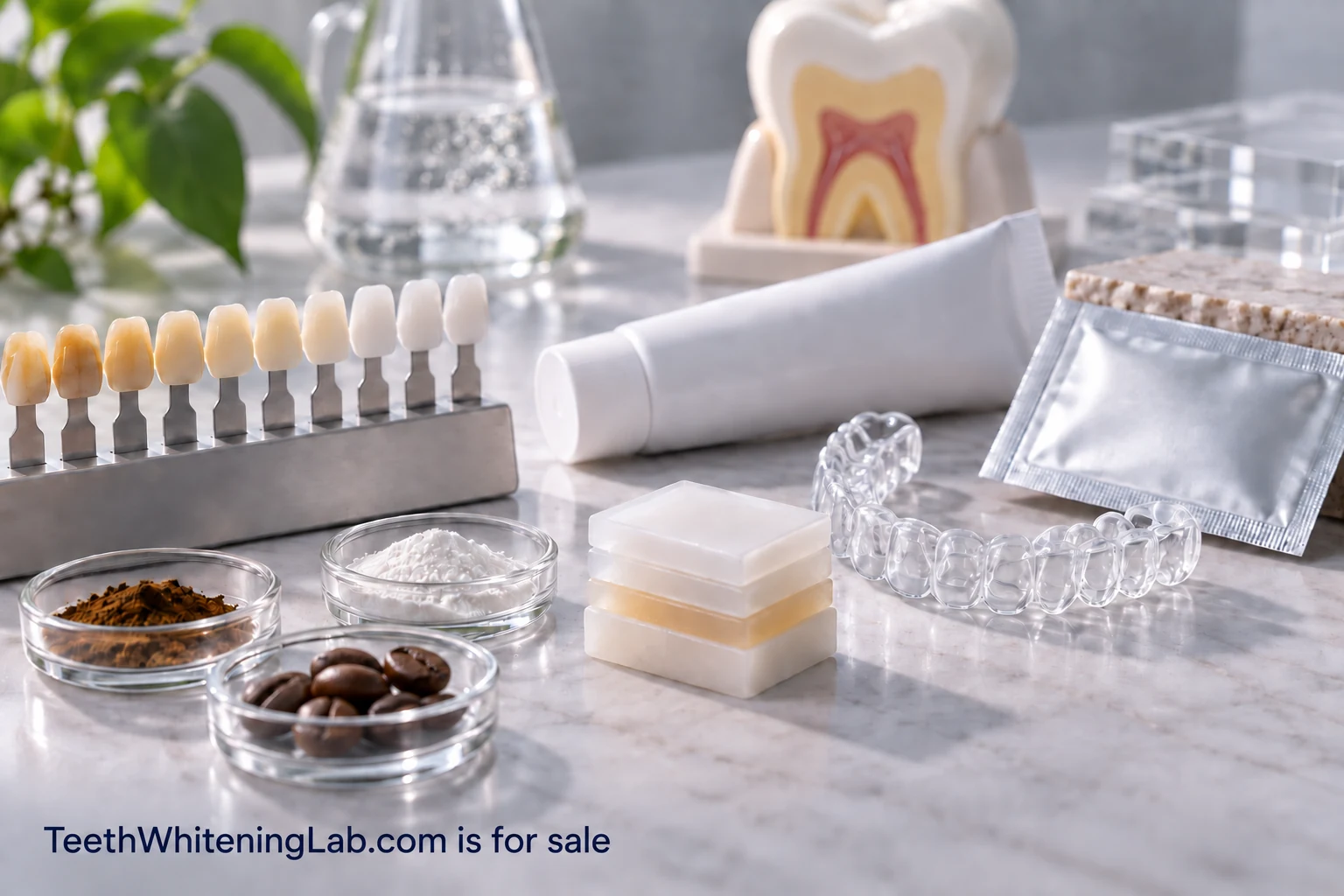
Teeth whitening is often discussed as though every product performs the same job. It does not. A toothpaste that helps remove surface stains works differently from a peroxide bleaching product. Natural tooth structure responds differently from a crown or filling. The reason for discoloration can also affect what a person sees and what a dentist may want to evaluate.
This guide explains those distinctions without recommending a product or deciding whether whitening is appropriate for any individual. A licensed dentist can examine the teeth, review oral health and restorations, and discuss options in context.
Whitening is an umbrella term
Everyday conversation uses whitening for several kinds of color change. Some products remove material from the tooth surface. Others use a bleaching agent to change colored compounds within the tooth. A professional cleaning may address certain external deposits, while a restorative treatment changes appearance through a different process altogether.
The American Dental Association's clinical overview divides discoloration into extrinsic, intrinsic, or a combination. Extrinsic stains collect on the outside of enamel and can be associated with strongly colored foods and drinks, tobacco, metals, oral hygiene, and other exposures. Intrinsic discoloration is within enamel or dentin and can have developmental, age-related, medication-related, traumatic, or other causes.
Those labels are helpful, but they are not a home diagnosis. A dark tooth after an injury, a new patch of discoloration, a cavity, and ordinary surface staining do not call for the same response. A dentist can evaluate an unexplained change before the person tries to cover it.
Surface-stain removal is mechanical work
Many whitening toothpastes rely mainly on abrasives and polishing agents to reduce extrinsic stains. That can make the tooth surface look cleaner or brighter without bleaching the intrinsic color of the tooth. The ADA overview notes that some toothpastes contain low levels of peroxide, but it still distinguishes their primary surface-stain role from peroxide products designed to bleach.
The ADA's consumer guide at MouthHealthy makes the distinction plainly: stain-removal toothpastes work on surface stains and do not change tooth color in the same way as bleaches. That matters when reading a package. Words such as whitening can describe different mechanisms, so the directions and stated purpose deserve more attention than the category name alone.
More abrasion is not automatically a better answer. A person should follow the product directions and ask a dentist about a suitable oral-care routine, especially when there is existing sensitivity, erosion, gum recession, dental work, or another concern. This article does not compare abrasive systems or tell a reader how often to use one.
Bleaching changes colored compounds
Hydrogen peroxide and carbamide peroxide are common bleaching agents. The ADA explains that peroxide can move through dental hard tissues and take part in oxidation reactions involving colored compounds within enamel and dentin. Carbamide peroxide releases hydrogen peroxide as part of that process.
The practical point is that bleaching is different from scrubbing away a surface deposit. Product concentration, delivery method, contact time, directions, starting shade, stain type, and individual tooth characteristics can all be part of the context. That is why a result from one protocol should not be copied onto another product simply because both contain peroxide.
Bleaching is also not the same as painting teeth white. It changes how color is expressed in natural tooth tissue. The response can vary across a mouth, particularly when some visible areas are natural teeth and others are restorative materials.
Restorations follow different rules
Crowns, veneers, fillings, and implants do not whiten like natural teeth. Both the ADA clinical overview and the MouthHealthy consumer guide call out this limitation. If natural teeth become lighter while a visible restoration keeps its original shade, the difference can become more noticeable.
That does not tell a person what to do about a particular restoration. Material, position, age, condition, surrounding tooth color, and the reason for discoloration all matter. It does explain why a review of existing dental work belongs near the start of a whitening conversation rather than after treatment.
A dentist may also need to investigate discoloration linked to decay, injury, the dental pulp, medication history, or development. A whitening product cannot be assumed to address the cause just because it changes appearance in some other situation.
The main paths are not interchangeable
The ADA describes several broad approaches. Over-the-counter products include toothpastes, strips, paint-on gels, and tray-delivered products. Dentists may provide custom trays for home use or perform in-office procedures. Each path comes with its own formula, concentration, application, supervision, and instructions.
It is tempting to turn those categories into a speed chart, but speed is only one question. A person's oral condition, the type of discoloration, restorations, sensitivity history, tolerance for a regimen, and expectations can all affect the discussion. A professional option is not simply a stronger version of every retail product, and two retail formats should not be treated as identical.
Look for exact product evidence when a seller makes an exact product claim. Evidence about an ingredient can be useful background, yet it may not establish how a finished formula performs under different directions. Testimonials and photographs can raise questions, but they do not replace a controlled comparison or an examination of the person considering treatment.
What research can and cannot settle
A 2018 Cochrane review of home-based chemical whitening included 71 randomized trials. The review found short-term whitening effects compared with placebo across several agents, but it rated the certainty of the evidence low or very low. Products, concentrations, application methods, schedules, and follow-up varied.
That combination is worth understanding. Evidence can show that a category has an effect under studied conditions while leaving uncertainty about which protocol is preferable for a particular person. A confident marketing claim may flatten those differences. A careful reader keeps the tested product, directions, outcome, timeframe, and study limitations together.
Research also changes. A good article shows when its sources were reviewed and avoids turning a single paper into a permanent rule. A good product page links the claim to evidence that actually matches the product.
A practical checklist before choosing a path
Before comparing options, write down the questions that need answers:
- Is the concern a surface stain, a broader change in natural tooth color, one dark tooth, or an unexplained new change?
- Are crowns, veneers, fillings, implants, or other restorations visible in the area?
- Is there current or previous tooth sensitivity, gum irritation, pain, damage, decay, or recent dental work to discuss?
- What does the product say it is designed to do?
- Which finished-product evidence supports that exact claim and set of directions?
- Who should review individual suitability before use?
The list is preparation, not a diagnostic tool. It helps separate the question about appearance from the questions about oral health, materials, and evidence.
The clearest next step
A person considering whitening can bring the stain history, restoration details, sensitivity questions, product directions, and desired outcome to a licensed dentist. The dentist can assess factors that a web page cannot see. If an over-the-counter option remains part of the plan, the product's directions and warnings still control its use.
Different whitening products work in different ways. Surface-stain removal, peroxide bleaching, professional supervision, natural tooth structure, and restorations belong in separate boxes before anyone compares them. Check which method a product uses before comparing its claims with those of another product.